Menu

BergerPowder No. 1 – Why I developed a powder at all, alongside BergerPearls No. 1!

When I developed BergerPearls No. 1, my aim was clear right from the start.

Caring for carrier pigeons should become easier.

It’s not any more complicated.

Not more labour-intensive.

And the breeder certainly shouldn’t have to moisten different powders every day and mix them into the feed.

As a biologist, product developer and long-standing carrier pigeon fancier, I have been exploring one key question for many years:

How can functional ingredients be administered to each individual pigeon as safely and as easily as possible?

It was precisely this line of thinking that led to the creation of BergerPearls No. 1.


My philosophy

I am convinced that:

My mission is not to develop as many products as possible.

My mission is to make caring for carrier pigeons as simple as possible, whilst ensuring it is as effective as possible.

That’s why BergerPearls No. 1 were the ideal solution for me right from the start.

They are simply mixed in with the grain feed.

Do not wet.

No additional mixing required.

No further steps are required.

If pigeons learn from a young age to eat every grain in a feed mix, there is hardly a simpler way to provide them with functional ingredients on a daily basis.

And that is precisely why BergerPearls No. 1 remain the standard solution within the BergerPIGEONS system to this day.


Good feeding doesn’t start with feed supplements

I’m often asked whether pigeons are selective eaters.

My answer is:

You can do it.

However, you really shouldn’t do that if at all possible.

For me, a controlled, rather restrictive feeding regime has been part of good management for decades.

This teaches the pigeons to eat as many grains as possible from a feed mix.

This has several advantages.

It is not only functional supplements that are absorbed more evenly.

The nutritional content of the grain mix is also utilised more fully.

That is why I generally recommend not allowing pigeons to feed continuously until they are completely full.


In practice, however, things don’t always work out the same way

As clear-cut as the theory is, the reality is just as varied.

Many breeders deliberately increase the amount of feed towards the end of the travel week.

Others generally let their pigeons eat more freely.

And it is precisely under these conditions that feeding behaviour often changes.

Well-fed pigeons are increasingly starting to be culled.

They prefer certain grains.

Other components of the mixture remain in place for longer.

At first, this is perfectly normal behaviour.

For me, however, this raised a different question.


The crucial question

I wasn’t concerned with the question of,

whether pigeons are selective in their diet.

What was really on my mind, however, was the question:

What are the implications of this behaviour for the absorption of functional ingredients?

After all, even the best formula is only effective if it is absorbed evenly.

As a biologist, I therefore look at more than just the composition of a product.

I am also studying in equal detail its journey right through to the pigeon’s metabolism.


That’s exactly how BergerPowder No. 1 came about

For me, the simplest solution – modifying the BergerPearls – was not an option

After all, BergerPearls do their job brilliantly.

Instead, another idea came to mind.

Why not offer the same functional active ingredient matrix in a second dosage form?

A form that, when required, can be distributed throughout almost every grain in a feed mix.

That is exactly how BergerPowder No. 1 came about.

It contains the same groups of active ingredients as BergerPearls No. 1.

The difference does not lie in the effect.

The difference lies solely in the method of administration.


When should I use BergerPearls?

Whenever,

if the pigeons are fed in a controlled manner and eat as much grain as possible.

That is exactly what BergerPearls were developed for.

Simple.

Quickly.

Without any extra work.


When should I use BergerPowder?

Whenever,

if larger quantities of feed are given,

picky eating is more likely to occur

or where a particularly even distribution of active ingredients is required.

The powder is sprinkled over slightly moistened feed and adheres to almost every grain.

This means that the pigeons consume functional nutrients at the same time, regardless of their preferred grain.


Not an either/or situation

I’m currently being asked this more often:

„Which product is better?“

My answer is:

None.

After all, both products have the same aim.

They differ only in their form of administration.

BergerPearls No. 1 remain the particularly straightforward standard solution.

BergerPowder No. 1 complements this system wherever the specific feeding situation suggests that an even more consistent intake of functional ingredients would be beneficial.


My conclusion

BergerPowder No. 1 was developed because I am convinced that good product development never stops.

Those who understand physiology observe what happens in practice.

Anyone who observes practice will discover new issues.

And those who take new challenges seriously come up with solutions.

No more products.

But rather, better opportunities for the breeder.

This is exactly what BergerPIGEONS stands for.


Discover BergerPowder No. 1 now

If you’d like to find out more about BergerPowder No. 1 or discover which dosage form best suits your care plan, you’ll find all the information on the product page.

➡️ Go to the BergerPowder No. 1 product page

BergerPowder No. 1 was not developed to replace BergerPearls No. 1.

My mission is to make feeding carrier pigeons as simple as possible, whilst ensuring it is as effective as necessary. That is precisely why BergerPearls No. 1 remain the standard solution within the BergerPIGEONS system. They can simply be mixed into the grain feed – without the need for moistening or any extra effort.

BergerPowder No. 1 was developed in response to a different question: How can functional ingredients be absorbed as evenly as possible, even when pigeons become more selective in their feeding when given larger quantities of feed? The powder provides a useful solution to this problem.

Why was BergerPowder No. 1 developed, even though BergerPearls No. 1 already exists?

How does BergerPowder No. 1 differ from BergerPearls No. 1?

When should I use BergerPowder No. 1?

Can I use BergerPearls No. 1 and BergerPowder No. 1 together?

Is BergerPowder No. 1 just as easy to use as BergerPearls No. 1?

BergerPearls No. 1 or BergerPowder No. 1?

Moulting – The feather is merely the visible result – but of what, exactly?

Why the most important preparations for the next travel season begin as early as the moulting season

„After the journey is before the journey.“

There is hardly a statement you hear more often in the world of carrier pigeon racing. And indeed: after weeks of intense races, things finally seem to be calming down. The pigeons are flying less, the strain is easing, and attention is turning to the regrowth of their plumage.

From a biological point of view, however, one of the most demanding phases of the whole year is now beginning. Moulting is not a break. It is a major biological undertaking.

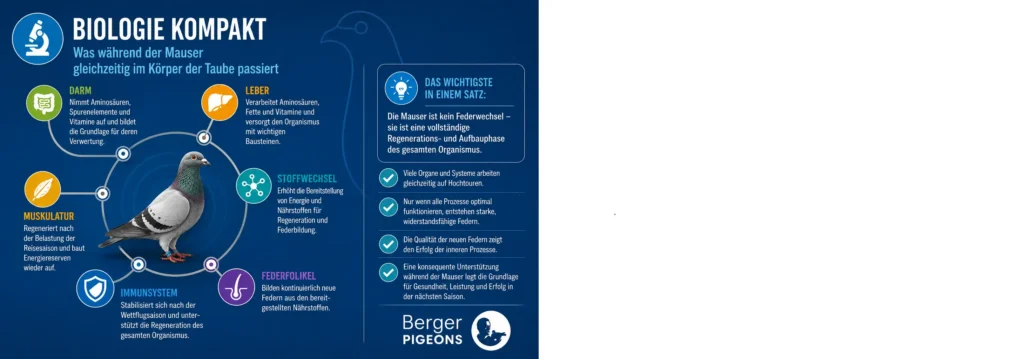
Whilst we as fanciers only see the feathers that are falling out and the new ones growing in, countless processes are taking place simultaneously inside the pigeon. The metabolism is working at full speed. The liver processes enormous quantities of nutrients. The muscles are regenerating after the stresses of the racing season. The immune system is stabilising. At the same time, a completely new plumage develops within a few weeks.

The spring is therefore not the actual process. It is merely the visible result.


Why many breeders misjudge the moulting process

Most breeders judge moulting almost exclusively on the basis of the plumage.

„The feathers are falling.“

„The feathers are growing.“

„The plumage looks good.“

This makes the spring itself the centre of attention.

Strictly speaking, however, one would have to look back much further.

For not a single feather grows of its own accord. Every feather is the end product of a complex biological process. Before it becomes visible, millions of new cells must be formed every day, proteins synthesised, amino acids supplied, minerals incorporated and energy converted.

In other words:

The spring simply shows how well the organism has functioned.

Anyone who looks only at the plumage is merely judging the end result – not the journey to get there.


The moult is one of the biggest biological projects of the year

Hardly any other phase poses comparable challenges to a carrier pigeon’s body.

After a long travel season, numerous systems need to recover whilst continuing to operate at full capacity.

These include, amongst others:

  • the liver as the body’s metabolic centre,
  • the gut as the site of nutrient absorption,
  • the muscles following the high G-forces experienced during flight,
  • the immune system,
  • the entire protein and energy metabolism.

At the same time, almost the entire plumage is being replaced.

Feathers consist mainly of keratin – an extremely strong structural protein. Considerable amounts of high-quality amino acids are required daily to build this protein, particularly methionine and cystine. At the same time, the need for trace elements such as zinc, copper and manganese, as well as various vitamins, increases significantly.

However, these building blocks can only be utilised if they can be absorbed and processed by the body in the first place.

This is exactly where the actual moulting begins.


Without a healthy gut, there can be no high-quality quill

When it comes to moulting, many breeders think first and foremost of protein. In fact, however, successful feather development begins much earlier – namely in the gut. This is where it is determined whether amino acids, vitamins and trace elements can be absorbed at all. If the gut microbiome is disrupted or the intestinal mucosa is compromised, even high-quality nutrients can only enter the body to a limited extent.

A healthy gut therefore means far more than just good digestion. It forms the basis for ensuring that all the building blocks for regeneration and feather formation are available in the first place. At the same time, a large part of the immune system is located in the gut-associated tissue. Gut health therefore influences not only nutrient supply but also general resilience during this demanding phase.


The liver – the real conductor of the moult

Once the nutrients have been absorbed, the liver begins its work. It decides which substances are to be processed, stored or made immediately available for regeneration.

The liver regulates fat metabolism, processes amino acids, synthesises numerous endogenous proteins and supplies the body with the building blocks required for the formation of new feathers.

This organ is under particular strain, especially after a long travelling season. For this reason, moulting should not be viewed solely in terms of feather growth. Above all, it is a phase of intensive metabolic regeneration.


A lot of protein doesn’t automatically mean a lot

There is still a widespread belief that birds should be fed as much protein as possible during the moulting season. From a biological perspective, however, this approach falls short. It is not the absolute amount of protein that determines success, but the quality of the amino acids it contains.

If certain essential amino acids are lacking, the body can only make limited use of the remaining protein components. Excess protein is not simply converted into better feathers, but must be metabolised through a complex process. At the same time, energy intake often increases, which can lead to the build-up of unnecessary fat reserves.

It is therefore crucial to ensure a continuous supply of the nutrients that are actually limiting – tailored to the biological requirements during the moulting period.


Regeneration means far more than just the formation of new tissue

The biggest misconception is to view moulting solely as a change of feathers. In fact, the entire organism regenerates during this period.

The muscles recover from the stresses of the racing season. Energy reserves are replenished. Damaged tissue is repaired. The immune system stabilises. At the same time, the foundations are laid for the coming breeding and racing season.

A pigeon that emerges from this phase with a stable metabolism, a healthy liver, a healthy gut and fully regenerated muscles starts the new year under completely different conditions to a pigeon that has not adequately managed these biological processes.


The next holiday season does not begin in spring

Many breeders invest a great deal of time in training, feeding and preparation in the spring. However, the biological conditions necessary for top performance are established much earlier. They are established now. During the moulting season.

This is what determines how fully the bird’s body regenerates, the quality of its new plumage, and the reserves with which the pigeon begins the next season.

That is why preparations for the next flying season do not begin with the first training flight.

It begins with a thorough recovery period immediately following the last prize trip.


Our conclusion

Anyone who regards moulting solely as a change of feathers is significantly underestimating its biological significance.

The plumage is merely the visible result of a highly complex interplay between gut health, liver function, metabolism, regeneration and an adequate supply of all the necessary nutrients.

This is precisely why the BergerPIGEONS system takes a holistic approach: the focus is not on individual products, but on the biological processes that determine health, recovery and performance.

After all, each feather ultimately reveals how well the organism has functioned in the weeks leading up to that point.


How to put this knowledge into practice

Biological principles form the basis – but what is crucial is applying them consistently in everyday life.

That is why, drawing on the latest scientific findings and our many years of practical experience, we have developed a BergerPIGEONS Mauser Care Plan developed. It explains, step by step, how you can specifically support your bird’s metabolism, gut, liver and feather development throughout the moulting period.

About the BergerPIGEONS Moult Care Plan

You now know why moulting is such a demanding biological process. Our BergerPIGEONS moulting care plan, as well as our A detailed practical guide to moulting.

Many breeders base their decisions on the visible moult. In fact, the biological changes begin much earlier and affect the entire organism.

Does moulting really only begin when the first primary feather falls out?

Why does the liver determine the quality of the new feathers?

Is it enough to feed them extra protein during the moulting season?

What does a high-quality feather really reveal about a pigeon?

Why do preparations for the next travel season begin as early as the moulting season?

A new chapter begins – two paths, one shared philosophy.

Some encounters are forgotten. Others leave a lasting impression that, decades later, leads to something new.

There are moments that cannot be planned.

Moments when paths cross again after many years and something new emerges from a shared conviction.

That is exactly how the partnership between Sébastien Casaert and BergerPIGEONS came about.

Many of you will know Sébastien as one of the most successful Belgian carrier pigeon fanciers of recent decades. Top performances at national level, international successes and, in particular, his victory in the Barcelona International Race for hens, alongside his son Hugo, have made him famous far beyond Belgium’s borders.

It is now more than 30 years since we first met. We had the pleasure of getting to know one another through the sport of carrier pigeon racing back in the early 1990s.

Back then, the same question was already the main focus for both of us:

How can you keep racing pigeons healthy in the long term and enhance their performance in a natural and transparent way?

Whilst Sébastien was making history in national and international racing pigeon competitions, my own path – taking in a degree in biology, research into metabolism and more than three decades of product development – eventually led me to found BergerPIGEONS.

Although we have gone our separate ways, we have never lost sight of what really matters.

Over the years, we have each – in our own way – come to the same conclusion: long-term success does not come from ever more products, but from a logically structured and consistently applied supply system.

That is precisely why one sentence from Sébastien’s personal account struck a particular chord with me:

„To be successful in pigeon racing, you need three things: the pigeon, the fancier and the system.“

As soon as I read that sentence, I knew straight away: that’s exactly why we’re coming together again today.

What I’m particularly pleased about is:

Sébastien didn’t choose BergerPIGEONS because of an advertising leaflet or a promise.

He spent many months studying my philosophy, the care programme and the products in depth. We shared our experiences and discussed the challenges facing the modern sport of carrier pigeon racing.

Step by step, this exchange gave rise to the idea of jointly developing BergerPIGEONS in France and the Benelux countries.

„For me, this is not the start of a traditional partnership, but rather the coming together of two people who share the same vision of the modern sport of pigeon racing.“

It is the result of mutual trust, shared values and a common conviction that honesty, experience and a logically structured supply system form the basis for sustainable success.

Rather than continuing this story in my own words, I’d now like to let Sébastien speak for himself.

Below, I am publishing his personal account – unedited and in its original language.

He describes his journey, his fresh start in France and the reasons why he decided to join BergerPIGEONS on this new chapter of his journey.


Sébastien Casaert’s personal account

(Below are links to the original article by Sébastien Casaert in English and French.)

A NEW ADVENTURE Sebastien Casaert

A NEW ADVENTURE Sebastien Casaert

This is just the beginning

The publication of this article marks the start of a new chapter for both of us.

Over the next few days, Sébastien and I will be speaking together on camera for the first time about our journey, our experiences and our shared philosophy on pigeon racing.

Not a traditional interview, but a personal conversation between two people whose paths have crossed again after many years – united by the same passion for pigeon racing and the same conviction that lasting success is based on healthy pigeons, sound knowledge and a well-thought-out care system.

We would like to take you along on this journey with us and share our experiences, our beliefs and our philosophy with you.

I’m really looking forward to writing this new chapter together with Sébastien. And I’m even more excited about you joining us on this journey. Because this is just the beginning.

Yours,

Alfred Berger

Care plans for young pigeons: Successful through the darkening phase, training & race preparation

The young pigeon journey is not only decided on the first race.
The foundations for stable health, orientation, resilience and later peak performance are laid weeks in advance, particularly during the darkening phase and during the training and preparation phase.

Young pigeons in particular react sensitively to changes in metabolism, the microbiome and external stress. If you work haphazardly during these phases, you risk fluctuations in form, poor feed intake, unstable digestion or a drop in performance during the season.

This is why structured care plans are becoming increasingly important in modern racing pigeon sport.

You can find the complete pension plans for both phases here:

👉 Supply plan for young pigeons Darkening phase
👉 Supply plan for young pigeons Training & preparation phase


Why the care of young pigeons is more important today than ever before

Young pigeons are biologically in an extremely sensitive development phase.

While old pigeons already have:

  • a stable microbiome,
  • trained metabolic processes,
  • a mature immune defence,
  • and experience in dealing with stress,

young pigeons must first develop these systems.

This is exactly where many problems arise later in the travelling season.

From a scientific point of view, several stress factors act simultaneously in this phase:

  • Growth,
  • Spring formation,
  • hormonal changes,
  • Training load,
  • Adaptation of the energy and fat metabolism,
  • Stress due to group dynamics,
  • Transport and orientation training.

The organism of the young pigeon must learn to regulate all these processes simultaneously.


The darkening phase for young pigeons - more than just light control

Many breeders associate darkening exclusively with the control of the moult.
However, it actually influences much more:

  • Metabolic activity,
  • Hormone balance,
  • Regeneration,
  • Spring development,
  • Immune stress,
  • Behaviour and stress level.

The darkening phase is therefore not a passive rest period, but an active development phase.

Now is often the time to decide:

  • how stable the young pigeons train later,
  • how resilient the immune system remains,
  • and how calmly the animals get through the season.

Scientific background: light, hormones and metabolism

The duration of light has a direct influence on the pigeon's hormonal system.

It is controlled by the pineal gland and hormonal signalling pathways, among other things:

  • Spring growth,
  • Metabolic activity,
  • Regeneration behaviour,
  • Activity level,
  • Energy consumption.

Less light often means less light:

  • lower activity,
  • reduced energy consumption,
  • fewer stress reactions,
  • more stable spring development.

This explains why many young pigeons appear calmer and more controlled during the darkening phase.

At the same time, care must not be neglected in this phase.

This is because intensive processes continue to take place in the body even when external stress is reduced:

  • Feather formation requires amino acids,
  • Immune cells need energy,
  • The gut and microbiome continue to develop,
  • the metabolism remains highly active.

Intestinal health and microbiome - the underestimated basis of high-performance young pigeons

More and more scientific studies are showing this:

A stable microbiome has a direct influence:

  • Immune defence,
  • Feed utilisation,
  • Regeneration,
  • Stress resistance,
  • Performance.

However, young pigeons in particular do not yet have a completely stable microbial balance.

Stress, the start of training or changes in feed can therefore lead to problems more quickly:

  • soft faeces,
  • poorer feed intake,
  • Fluctuations in form,
  • increased susceptibility to infections.

Modern care concepts therefore increasingly rely on:

  • Intestinal stabilisation,
  • constant feed intake,
  • Targeted supply of functional nutrients,
  • Supports the liver and energy metabolism.

The training and preparation phase - now the actual build-up of form begins

When training begins, the entire stress situation of the young pigeon changes.

Energy consumption increases significantly.

Now young pigeons have to learn:

  • longer flight times,
  • develop orientation under stress,
  • to deal with stress in basket training,
  • to regenerate quickly.

Many breeders underestimate how strongly training influences the metabolism.

Even moderate flight training increases:

  • the energy requirement,
  • the consumption of amino acids,
  • oxidative stress,
  • the strain on muscles and circulation.

This is precisely why young pigeons need clearly structured care during this phase.


Energy supply: Why carrier pigeons work differently than many other animal species

Carrier pigeons are among the most efficient endurance athletes in the animal world.

While many mammals primarily utilise carbohydrates under stress, racing pigeons work exceptionally hard using fat metabolism.

This makes them extremely durable.

At the same time, however, this also means

The energy metabolism must be trained at an early stage and given stable support.

If this stability is lacking, it often becomes apparent:

  • Lack of joy of flying,
  • poor regeneration,
  • unstable performance,
  • rapid exhaustion.

Modern care during the training phase therefore provides targeted support:

  • Energy availability,
  • Liver function,
  • Fat metabolism,
  • Muscle regeneration,
  • Microbiome stability.

Regeneration - the often underestimated performance factor

Performance is not only achieved during training, but above all during regeneration.

Young pigeons in particular react sensitively to this:

  • incomplete recovery,
  • high load density,
  • Fluid losses,
  • Amino acid deficiency,
  • oxidative stress.

Targeted regeneration provides support:

  • Muscle metabolism,
  • Circulation,
  • Immune system,
  • faster recovery,
  • stable willingness to train.

This is why modern supply systems increasingly rely on functional combinations:

  • Amino acids,
  • Electrolytes,
  • Microbiome support,
  • Metabolic activation,
  • high-quality energy sources.

Structure instead of chaos: why clear supply plans are so important

Many problems in the young pigeon sector are not caused by individual mistakes, but by a lack of structure.

Unsteady processes often lead to

  • changing feed intake,
  • Stress,
  • unstable digestion,
  • unclear training development.

A structured care plan, on the other hand, can help:

  • clear routines,
  • constant supply,
  • Stable load control,
  • better control over development and shape.

This is exactly what modern care concepts in racing pigeon sport are based on today.

The complete pension plans for both phases can be found here:

👉 Young pigeons darkening phase - complete plan
👉 Young pigeons training & preparation phase - complete plan


Conclusion: Successful young pigeons do not develop by chance

The darkening phase and the training or preparation phase are among the most important development phases in the entire racing pigeon year.

If you work in a structured way here, you create the basis for:

  • stable health,
  • calm development,
  • resilient muscles,
  • strong orientation,
  • consistent performance throughout the season.

Today, modern care no longer means „as much as possible“, but rather:

to work in a targeted, biologically sensible and systematic manner.

Because top performance begins long before the first race flight.


Young pigeons are darkened so that they are not already in the main moult during the races in August. The aim is to achieve a good moult with plumage that is as complete as possible and a hand-wing moult that is not yet very advanced. This keeps the young pigeons more efficient, more stable and at an advantage in late summer.

Why is the darkening phase important for young pigeons?

What is the best way to support young pigeons during the training phase?

Why does the microbiome play such an important role in racing pigeons?

Which stresses are particularly strong during the preparation of young pigeons?

Why is regeneration so important for young pigeons?

When does the mould build-up in young pigeons really begin?

Modern hygiene concepts in racing pigeon sport: Gentle methods for maintaining health during the racing season

The racing season places enormous demands on our racing pigeons week after week.
As the duration of the journey increases, the hygienic and microbial pressure rises in many herds and often goes unnoticed at first.

Many breeders observe this phase:

  • slower regeneration
  • fluctuating shape
  • Reduced enjoyment of training
  • Softer faeces images
  • Increased mucosal stress

This is precisely why modern, gentle hygiene concepts are becoming increasingly important in racing pigeon sport.

Modern support instead of unnecessary stress

More and more successful racing flocks are now relying on preventative hygiene measures to keep their pigeons stable and efficient throughout the season.

An interesting approach here is the use of WaterControl based on hypochlorous acid (HOCl).

Hypochlorous acid is not a foreign substance, as HOCL is even used by the body's own immune system to control germs. HOCl can therefore help to neutralise viruses, bacteria, yeasts and fungi, thereby reducing the hygienic pressure in the stock.

Particularly interesting for the travelling season:

  • No classic antibiotic load
  • No known resistance problems
  • Hygienic support via the drinking water
  • Can also be used as a goitrogen rinse
  • Can be used flexibly during stressful travel phases

WaterControl as a goitre rinse on the day of flight

This is a modern and gentle option, WaterControl directly on the evening of the flight day as a crop rinse (dosage with double intensive hygienisation).

This can be particularly helpful after heavy flights:

  • reduce the hygienic load in the crop area
  • support regeneration
  • guide the stock more stably through intensive travelling phases

Many breeders specifically combine this application with a customised supply of grain feed.

Multi-day use of WaterControl

Alternatively, WaterControl can also be used for several days at a time.

During this phase, it is advisable to administer other feed supplements directly via the grain feed rather than via the drinking water.

This ensures that hygienic support is constantly maintained, while the pigeons continue to be optimally supplied with important supplements.

Example of a modern supply plan with WaterControl

The application of WaterControl can be optimally integrated into a modern care plan for racing pigeons. Especially during intensive racing phases, this can help to reduce the hygienic pressure in the flock and support loft stability.

Important:
When using WaterControl No other preparations should be administered at the same time in the same drinking trough via the drinking water. Supplements are given directly via the grain feed during this phase.

Saturday (flight day)

After returning home, the focus is on regeneration and the intestinal environment.

Therefore in the first trough RecoverAmin Forte and SymBiotic according to the itinerary.

Recommended options:

  • WaterControl as a crop rinse on the evening of the flight day
  • alternatively with feeding or in the evening WaterControl as intensive hygienisation via the drinking water with 3-5 ml/L once after stressful flights

Especially after heavy flights, this can help to reduce the hygienic pressure in the crop and drinking water area.

Sunday

  • Intensive hygienisation with 3 - 5 ml/L WaterControl about drinking water
  • Administer feed supplements directly over the grain feed
  • Observation of faeces, mucous membranes and feed intake

Monday

  • Continuation now as daily maintenance hygiene with 0.5 - 1.0 ml/L WaterControl about drinking water
  • Continue to administer supplementary feed via the grain feed
  • Focus on liver regeneration and metabolism

Tuesday and Wednesday

  • WaterControl still possible via the drinking water
  • Hygienic stabilisation during increasing load
  • Continue to use supplements via the feed if necessary

Thursday and Friday

  • Supply according to weekly travel plan
  • Check water absorption and vitality

Supplementary instructions for use

WaterControl is based on hypochlorous acid (HOCl) and was specially developed for drinking trough hygiene in the racing pigeon loft.
It supports:

  • the reduction of biofilm
  • Hygienically clean drinking troughs
  • the reduction of microbial pressure in the stock

Regular use can be a valuable component of modern stroke hygiene, especially during the racing season.

Why modern hygiene management is becoming increasingly important

The longer the journey, the higher the infection pressure in the herd.
Not every strain is immediately visible and many problems develop gradually.

Therefore, regular monitoring remains important:

  • Faeces samples
  • Veterinary diagnostics
  • Observation of behaviour and regeneration

Important to understand:
WaterControl does not replace a vet or diagnostics.
However, modern hygiene management can be a valuable component in keeping racing pigeons stable and efficient throughout the season.

More information: www.bergerpigeons.com/Hygiene


WaterControl is a hygienic support based on hypochlorous acid (HOCl) to stabilise racing pigeons during the racing season.

What is WaterControl for racing pigeons?

Can WaterControl be used as a goitre irrigation?

When should WaterControl be used for racing pigeons?

Can feed supplements be used at the same time?

Does WaterControl replace a vet or medication?

Weaning young pigeons correctly - development and care in the first 21 days

The weaning phase for young pigeons is one of the key stages in pigeon racing.

These first weeks after separation from the parents determine how stable the digestive system, immune system and metabolism will develop.

Many processes work in practice even without targeted control.
Nevertheless, this has been shown time and again:

Many problems that occur later have their origin precisely in this phase.

If you understand the weaning phase better, you can utilise it in a targeted manner and make the development of the young pigeons much more stable.


What happens when young pigeons are weaned?

A fundamental biological change takes place during weaning:

  • from feeding by the parents to their own food intake
  • From passive immune protection to active immune performance
  • from supported metabolism to independent regulation

This changeover takes place within a few days and not gradually over weeks.

For the young pigeon this means

👉 Several systems have to reorganise themselves at the same time.


Digestion and intestines - an underestimated weak point

During rearing, young pigeons benefit from predigested feed.
After weaning, they must ingest and fully digest grains themselves.

Several points are decisive here:

  • Enzyme production must adapt
  • Intestinal movement (motility) is re-regulated
  • Nutrient uptake is still unstable at first

Typical observations in this phase:

  • Changing faecal consistency
  • uneven feed intake
  • Different development in the portfolio

👉 The intestine is not yet fully functional.


The microbiome - structure instead of balance

A stable gut is largely dependent on the microbiome.

In the weaning phase, however, the aim is not to maintain an existing equilibrium, but rather to

👉 build up a stable microbiome in the first place

That means:

  • Colonisation of the intestinal wall by microorganisms
  • Competition between „desirable“ and „undesirable“ germs
  • Formation of a stable intestinal barrier

A well-developed microbiome provides support:

  • the digestion
  • the immune function
  • the resistance to infections

Immune system - transition to personal performance

In the first few weeks of life, young pigeons receive antibodies from their parents.
This protection decreases significantly after weaning.

The immune system must now:

  • react independently
  • Recognising environmental germs
  • Build up your own defence

This phase is decisive for the later resilience of the pigeon.

👉 Too much strain can be too much.
👉 Too little stimulation can slow down development.


Stress in the weaning phase - often underestimated

Weaning always means stress for young pigeons:

  • Separation from the parent animals
  • New environment
  • New social structure
  • Independent feed intake

Stress has a direct effect:

  • Digestion
  • Feed intake
  • Immune system

This can further intensify an unstable phase.


Proper support for young pigeons in the weaning phase

In practice, it shows:

Many breeders already successfully accompany this phase - often based on experience.

A structured approach can, however, help to optimise development:

  • calmer
  • more constant
  • more comprehensible

design.


A proven principle: working in three phases

The weaning phase can be usefully divided into three stages:

1. stabilisation (day 1-7)

  • Creation of a stable intestinal environment
  • Support for digestion
  • Smooth transition without additional load

2. securing (day 8-14)

  • Stabilisation of the microbiome
  • Control of the infection pressure
  • Adaptation to increasing environmental contacts

3. stabilisation (day 15-21)

  • Development of resilience
  • First flight stimuli
  • Preparation for further requirements

Why a structured care plan makes sense.

A clear process helps to implement measures in a targeted manner:

  • When intestinal stability is in the foreground
  • when the balance must be secured
  • when regulatory intervention should be made

👉 The decisive factor is not the quantity of measures, but their timing.


Conclusion: Making conscious use of the weaning phase

The weaning phase is not a problem phase -
but she is a decisive development phase in the life of the young pigeon.

If you leave it to chance, you will often still achieve good results.
Those who provide targeted support often succeed:

- more stable young pigeons
- More even development
- a better basis for subsequent travel performance

Further information: The BergerPIGEONS weaning protocol

A concrete supply plan for this phase can be found here:

👉 Weaning protocol for young pigeons - day 1-7
👉 Weaning protocol for young pigeons - day 8-14
👉 Weaning protocol for young pigeons - day 15-21

Young pigeons are usually born at the age of about 24 to 28 days weaned as soon as they eat and drink on their own.

More important than the exact age, however, is the stage of development:

  • Safe feed intake
  • active behaviour
  • Stable physical condition

Weaning too early can put unnecessary strain on development, whereas a slightly later time is often not critical in practice.


When should young pigeons be weaned?

Should the feed be changed after weaning?

Why is gut health so important at this stage?

When does it make sense to use WaterControl for young pigeons?

How can you recognise that young pigeons are coming through the weaning phase well?

L-carnitine & co. in the race: How to specifically boost the energy metabolism of your racing pigeons

More energy. More stability. More willingness to perform in the racing season.

When racing pigeons go on races, they perform exceptionally well.
Their metabolism works at full speed during continuous flight with up to 10-15 times the resting metabolic rate. While other animal species mainly rely on carbohydrates during exercise, racing pigeons mainly use fat as an energy source. This is precisely where their enormous endurance potential lies - but also a potential bottleneck.

Anyone who understands the power metabolism can Feeding, training and regeneration and thus create the basis for consistent performance throughout the entire racing season.


Why the energy metabolism decides between victory and mediocrity

The large pectoral muscle (pectoralis major) is the power centre of the carrier pigeon. It is rich in mitochondria, the „power stations of the cell“, and is optimally supplied with blood.

However, three decisive stress factors occur under racing flight conditions:

- The transport of long-chain fatty acids into the mitochondria can have a limiting effect
- The muscles can become over-acidified due to high levels of stress
- The increased oxygen turnover increases oxidative cell stress

This is where functional nutrients such as L-carnitine, beta-alanine, L-histidine, taurine, vitamin E, vitamin C and selenium come into play.


L-carnitine - the door opener for fat burning

L-carnitine plays a key role in energy metabolism. It transports long-chain fatty acids into the mitochondria, where they are used to generate energy.

What does that mean in practical terms?

- More efficient fat utilisation
- More stable power supply over long distances
- Support for aerobic endurance performance

Studies on racing pigeons showed lower plasma lactate levels after carnitine supplementation and faster normalisation of the heart rate after exercise. This indicates more efficient energy utilisation and better recovery.

This mechanism can be crucial, especially in long-distance flight, when every energy reserve counts.


Beta-alanine & L-histidine - protection against hyperacidity

When the muscle works hard, acids are produced. If the buffer capacity is exceeded, performance decreases.

This is where carnosine, the body's own acid buffer, comes into play.
The body needs beta-alanine and histidine in order to produce carnosine.

Important to know:
Beta-alanine is the limiting factor. Studies show that several weeks of supplementation significantly increases the carnosine level in the muscle.

The consequences:

- Delayed muscle acidification
- More stable contractility
- More load stability at the crucial moment

However, the lead time is crucial, as a short-term administration on the day of use is not sufficient.


Taurine - stability for the heart and cells

Taurine is particularly strong in heart and muscle tissue.

Its functions:

- Stabilisation of the cell membranes
- Regulation of the calcium balance in the heart muscle
- Supporting the water balance during heat stress
- Protection against oxidative stress

This mechanism is particularly relevant in endurance flight, when the heart and muscles are constantly working.


Antioxidant protection: vitamin E, vitamin C & selenium

High performance means high oxygen turnover and thus the formation of free radicals.

Vitamin E protects the cell membranes and the mitochondria.
Selenium supports antioxidant enzymes and supplements the effect of vitamin E.
Vitamin C regenerates oxidised vitamin E and stabilises the entire protective system, especially under stress, heat and transport conditions.

Poultry studies show that combined supplementation can reduce oxidative muscle markers.


Feeding recommendations for racing pigeons in the preparation phase

The foundation for a stable competition season is already laid in the training and preparation phase.

In this phase, the focus is on the continuous build-up of metabolic capacity:

- Early supplementation with L-carnitine to support the transport of fatty acids
- Start beta-alanine supplementation at least 3-4 weeks before the first competition flights
- Development of the antioxidant protection system with vitamin E, vitamin C and selenium
- Continuous supply of taurine to stabilise heart and muscle cells

The aim is to optimally prepare the energetic and cellular systems before the first high load.


Feeding during the competition season: stabilise instead of improvise

During the current competition season, the focus is no longer on building up, but on stabilising and maintaining performance.

Key points:

- Continuous supply of L-carnitine to ensure an increased carnitine content in the muscle tissue
- Continuation of the beta-alanine supply to maintain the buffering capacity
- Antioxidant accompaniment to control oxidative stress
- Taurine supports cell and heart metabolism

A purely selective administration on the day of use cannot have a lasting effect on these processes.
Physiological logic speaks in favour of continuous support during the training and travel phases.


Regeneration phase after the race: the basis for the next top performance

After the flight, the decisive phase for the next performance begins.

Regeneration focusses on the following mechanisms:

- Restoration of the acid-base balance
- Reduction of oxidative stress
- Stabilisation of the cell membranes
- Support for the heart and muscle cells
- Replenishment of performance-relevant amino acids

Antioxidant components and taurine play an important role here.
L-carnitine can also contribute to metabolic stabilisation by maintaining energy metabolism and supporting mitochondrial function.

Targeted support through RecoverAmin Forte

A regeneration concept such as RecoverAmin Forte is specifically positioned in this sensitive phase after the race.

The combination of valuable amino acids provides support:

- muscular regeneration
- the reconstruction of strained muscle structures
- Stabilisation of the metabolism after intensive exercise

Amino acids are particularly relevant after a flight, as they are needed for repair and adaptation processes in the muscle.

Intestinal stability and metabolic balance with SymBiotic

In addition to muscle regeneration, the stability of the digestive system also plays a central role. Exercise, transport and race stress can influence the intestinal flora.

This is where a concept like SymBiotic comes in and provides support:

- stabilisation of the intestinal flora
- improved nutrient utilisation
- the overall metabolic balance

Stable intestinal function is a prerequisite for optimum absorption of performance-relevant nutrients in the subsequent training and competition phase.


A structured regeneration strategy consisting of antioxidant protection, metabolic stabilisation, targeted amino acid supply and intestinal support is decisive for how quickly a racing pigeon is ready to perform again.

If you manage your regeneration professionally, you not only secure your current form, but also build the basis for consistent top performances throughout the entire competition season.


Practical relevance: Modern supplementation strategies in racing pigeon sport

In specialised feed supplements CarniBoost For racing pigeons, there are combined formulations with L-carnitine, beta-alanine, histidine, taurine and antioxidant protective factors.

The liquid application via drinking water enables even absorption and rapid availability.

This supply concept through „CarniBoost“ is based on the principle of metabolic synergy.


Conclusion: Performance is no coincidence - it's metabolism

The modern racing season demands more than just good training.

Those who understand the physiological basis of energy metabolism and provide targeted support create the basis for:

- Constant energy supply
- Reduced metabolic stress
- More stable regeneration
- Sustainable performance

👉 Would you like to not only train your racing pigeons, but also support them metabolically at a top level?

Then rely on a well thought-out feeding strategy from the preparation phase through to regeneration.
Find out now about performance-physiologically based supplement concepts at BergerPIGEONS.com and turn your team's metabolism into your competitive advantage. stay.

.

L-carnitine improves the transport of fatty acids into the mitochondria and thus supports aerobic energy production and endurance performance in racing pigeons.


What effect does L-carnitine have on racing pigeons?

Why is beta-alanine important for racing pigeons?

Should L-carnitine only be given on the day of use?

What role does taurine play in racing pigeons?

What role do vitamin E and selenium play in competition flights?

Is vitamin C useful for racing pigeons despite their own production?

Why is the regeneration phase so important for racing pigeons?

What role do amino acids play after the race?

How does RecoverAmin Forte support regeneration?

Why is the intestinal flora important after the race?

What function does SymBiotic fulfil in regeneration?

Care plan for the races: orientation for the fancier, performance stability for racing pigeons

With the new menu item Pension plans provides BergerPIGEONS The new plan is now available for the first time and is practice-orientated and starts exactly where races are decided: in the days between two assignments.

The now published Supply plan for the phase between races is aimed at racing pigeon fanciers who want to improve their feeding, supplementation and support. Structure clearly, without forcing their pigeons into a rigid system.

Why the phase between races is crucial

The decision is made between arrival and re-entry,
whether a carrier pigeon Fully regenerated,
their Metabolic processes stabilised
and physically and mentally ready to perform again is.

Feed changes or only selective supplements often lead to form fluctuations:
slow regeneration, unnecessary strain or lack of consistency throughout the racing season.

This is precisely where the new supply plan comes in.


Clear weekly schedule instead of daily uncertainty

The Supply plan is as Clear weekly schedule constructed.
Each day between two races fulfils a concrete function:

  • Regeneration after the flight
  • Stabilisation of the intestines, metabolism and immune system
  • Targeted preparation for the next assignment

The tabular presentation makes it possible, at a glance to recognise which care is appropriate on which day.

👉 The plan is printable and deliberately designed so that it can be used permanently in the loft or feed room.


Practical, not theoretical

The pension plan deliberately avoids long theoretical treatises.
Instead, the Practical realisability in everyday life in the foreground.

All products mentioned are:

  • linked directly in the plan
  • with detailed Detailed descriptions deposited

Additional explanations are provided below the plan:

  • Why a measure is used on exactly this day
  • what physiological purpose it fulfils
  • which systems of the pigeon are supported (e.g. digestion, mineral balance, regeneration)

This creates a greater understanding and not just an application according to a scheme.


A basic framework, not a dogma

The care plan is intended as a guide for the use of BergerPIGEONS products. It is a resilient basic structure, which can be adapted to different flight loads. The plan deliberately does not contain any explicit feed recommendations, as the experience of each individual breeder and personal preferences can be taken into account.

Experienced growers in particular benefit from this because they can use their own observations Classify specifically and make well-founded adjustments instead of reacting on instinct.


For whom is the Supply plan thought?

The plan is suitable for:

  • Beginners who Security and structure Search
  • Advanced users who want to optimise their more constant want to design
  • experienced breeders who have a Reference system want to use for their decisions

Regardless of performance level, the same goal always takes centre stage:
healthy, stable racing pigeons ready for repeated use over the entire racing season.


Now available - more plans to follow

The Supply plan for the phase between races is now available online:

👉 https://bergerpigeons.com/versorgungsplan/

Further pension plans for:

  • Rest phase
  • Mauser
  • Breeding
  • Young animals

are already in preparation and will gradually supplement the system.

A feeding plan is a structured overview of the feeding and supplementation of racing pigeons, tailored to training and racing phases.

What is a care plan for racing pigeons?

Why is it so important to have supplies between races?

Is the care plan suitable for beginners?

Do all products have to be transferred exactly?

Are there any other Berger Pigeons supply plans?

Clostridia in the intestines of racing pigeons: an invisible brake on performance during the racing season

Or, why do healthy pigeons lose performance during the season?

Many growers are familiar with this phenomenon:
The pigeons appear healthy on the outside, the training is good, the feed is of high quality and yet the hoped-for results do not materialise. The animals do not come home sick, but noticeably later.

An often overlooked factor lies inside the pigeon: Intestinal health. To be more precise Subclinical clostridial contamination in the intestine can significantly impair performance without causing classic symptoms of illness.


Clostridia - a natural inhabitant with a serious risk

Clostridia are anaerobic, spore-forming bacteria that occur naturally in the intestines of racing pigeons. In small quantities, they are part of the normal intestinal flora.

It becomes problematic when the Microbiological balance is disturbed, for example by

  • Stress during the racing season
  • Feed changes
  • Antibiotic administration
  • Concomitant infections

In such situations, clostridia can multiply rapidly, Form toxins and irritate the intestinal mucosa, often without causing visible diarrhoea or acute illness.

In these so-called subclinical courses, the pigeons appear healthy, but sometimes show dull plumage, delayed regeneration and poor form.

Straight Young pigeons, Old pigeons after hard flights or after 6-8 flights in the course of a season and increasingly often flocks after medication are particularly susceptible. The result: the pigeon flies below their capabilities.


Science & practice: What we know

Direct studies on the influence of subclinical Clostridia on the flight performance of racing pigeons are still lacking. However, numerous studies from the field of poultry science show that Clostridium perfringens can be found in other bird species even without severe symptoms. Significant loss of performance caused.

Microbiome studies also provide clear evidence:
👉 A stable gut microbiome is a key prerequisite for health and performance.

These findings are consistent with the many years of experience of specialised racing pigeon veterinarians: pigeons with an unclear weakness of form often show increased clostridia levels and their results improve significantly as soon as the intestines are specifically stabilised.


🔬 Why strategic gut reorganisation is the key to performance

The central finding from science and practice is clear:
A damaged or unstable gut microbiome does not regenerate by itself and certainly not in the short term.

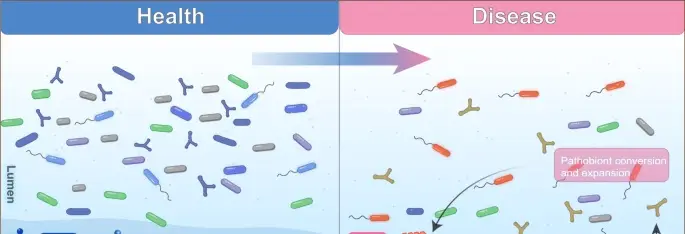
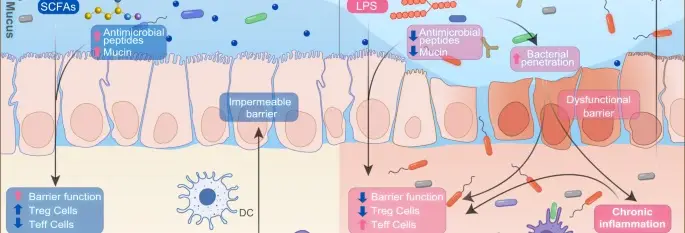
Fig.: Schematic representation of the healthy and diseased microbiome.

Subclinical clostridial contamination is not an acute problem, but rather a Chronic process, that builds up over weeks and months. That is precisely why it is enough not from, to use a product selectively or to „improve“ it at short notice during the season.

👉 Performance is only achieved when the gut is stabilised in the long term.

One Intestinal rehabilitation introduced at an early stage and strategically organised is therefore the decisive lever, ideally already long enough before the racing season and consistently throughout the season.


🧬 SymBiotic: Why the interaction of several probiotics really works

An efficient microbiome is No mono system, but a finely tuned ecosystem of different microorganisms with clearly distributed tasks.

This is precisely the decisive advantage of real SymBiotics.

The high-quality SymBiotic consciously uses the Interaction of several probiotics, which complement and reinforce each other:

  • Bacillus subtilis & Bacillus licheniformis
    → Enzyme dominance, competition suppression of clostridia, better feed utilisation
  • Pediococcus acidilactici & Enterococcus lactis
    → Lowering of the intestinal pH value, unfavourable environment for clostridia, stabilisation of the intestinal barrier
  • Bacillus velezensis
    → Broadly antimicrobial, immunomodulating, anti-inflammatory

Supplemented by Prebiotics (MOS & FOS) a real symbiotic system, that:

  • specifically promotes beneficial germs
  • binds pathogenic germs
  • closes ecological niches for Clostridia
  • and permanently stabilises the microbiome

👉 It is not a single strain that is decisive, but the functional interaction.


🕒 Why early & long-term is the decisive factor

A stable microbiome:

  • needs Time, to build yourself up
  • reacts sensitively to stress, flights, weather, food changes
  • must continuously maintained become

Therefore:

The earlier intestinal rehabilitation is started, the more stable the performance remains during the season.

Breeders who only react when performance has already been lost are often fighting against an already chronically disturbed balance.that the optimum effect of probiotic bacteria is only achieved with continuous daily intake.


🏁 Conclusion: take gut health seriously as a performance factor

The quintessence of all the findings is:

  • Clostridia are common not the real problem,
  • but a Symptom of an unstable microbiome.

In practice, this means

  • Regular Faeces analyses help to recognise subclinical problems at an early stage.
  • Antibiotics should not prophylactic, but only be used in a targeted manner.
  • After stress, the gut needs Active regeneration.

Only one Strategic, long-term intestinal rehabilitation with a genuine SymBiotic:

  • builds up the microbiome sustainably
  • protects against subclinical loss of performance
  • Improves regeneration, endurance and flight speed
  • and creates consistent form over the entire competition season

In this way, the basis for clostridial overgrowth is removed precisely where performance is lost unnoticed.


Conclusion for racing pigeon fanciers

Subclinical clostridia belong to the The most common but least recognised performance brakes in racing pigeon sport.
If you want to achieve top performance in the long term, you should Intestinal health of his pigeons just as consistently as training and feeding.


👉 You would like to optimise the intestinal health of your flock and get the full performance potential out of your pigeons.

Then start now with a targeted intestinal cleanse:
Faeces analysis
✔ Reduction of unnecessary burdens
✔ Use of high-quality Symbiotics for microbiome stabilisation

Tip: We now recommend a symbiotic intestinal cure daily for 2-3 weeks at a time.

Clostridia are intestinal bacteria that are normal in small quantities, but can impair performance if they overgrow.

What are clostridia in racing pigeons?

Can clostridia reduce flight performance?

How do you recognise subclinical clostridia?

Are antibiotics against clostridia useful?

What supports the intestinal health of racing pigeons?

The right time to start BergerPearls No.1: Why early feeding significantly improves the health and performance of your racing pigeons

Why does the time of launch also determine success or failure?

Many growers ask: "When should I start the BergerPearls No.1 start?"
My counter-question: Why wait when the decisive advantage is an early start?

BergerPearls No.1 is not just a feed supplement. It is a scientifically based, functional nutritional concept that combines energy, intestinal health, immune modulation and antimicrobial stability. These mechanisms of action only develop their full potential if pigeons are familiarised with the pearls early and regularly.

The experience gained from over 40 years of breeding and product development and the current scientific analysis and data on BergerPearls No1 clearly show that:

Whoever starts in winter wins in spring.
If you start late, you give away performance and stability.

This blog article shows you why the right start time is a hidden performance factor in racing pigeon racing and how you can BergerPearls No.1 optimally.


Why BergerPearls No.1 redefines the feeding of modern racing pigeons

BergerPearls No.1 combine several functions that were previously only available via many individual products. Each pearl contains:

  • an energy-rich peanut kernel base
  • Probiotics and prebiotics
  • Digestive enzymes
  • Beta-glucans and colostrum
  • MCT fatty acids
  • Toxin binders such as bentonite and zeolite
  • essential vitamins and chelated trace elements
  • Herbal active ingredients such as carvacrol (oregano extract)

These components are scientifically documented, safe and effective to use.

The gentle pelletising process protects particularly heat-sensitive substances such as probiotics or plant extracts and ensures that the pearls remain fully active, which is a key advantage over conventional pellets, extrudates and other preparations.


Why winter is the ideal time to start

The best moment, BergerPearls No.1 into your stroke is now in the resting phase.
Why?

  1. Hunger intensifies learning processes
    Pigeons are most likely to accept new feed when temperatures are low and the metabolism "rewards food".
  2. No travelling load
    Without training and competition flights, the animals are calmer, more receptive and less stressed. The acceptance of new feed components is significantly higher.
  3. The resting phase creates ideal conditions
    In winter, there is much more calmness in the barn and no changing conditions. This relaxed basic situation makes it easier to introduce new feed components in a calm and controlled manner.
  4. Microbiome and immune system benefit from early start
    Probiotics, beta-glucans, colostrum and MCT fatty acids require Days to weeksto fully develop their effect. Late starters do not have this advantage.
  5. The transition to breeding and training becomes easier
    A stable gut means:
    - fewer fluctuations in shape
    - Faster regeneration
    - lower infection pressure
    - calm moulting and breeding

Short: Those who start early start the pigeon year with a head start.


The introduction strategy: How to feed BergerPearls No.1 correctly right from the start

Stage 1: Separate pre-feeding (2-3 days)

This phase determines acceptance and long-term success.

Procedure:

  • in the morning before a small amount of beads into the feed chute from the grain mixture
  • all pigeons eat reliably due to the hunger instinct

Why separate?
Pigeons must use the pearls as Independent, attractive component get to know.
Only when each pigeon picks up the beads safely does step 2 take place.

This is a key value from practical experience and is also biologically understandable, as pigeons learn to recognise and appreciate new food primarily through positive experiences.


Stage 2: Mixed feeding (5 % during the rest period)

As soon as the entire stock safely eats the pearls:

  • Beads in a quantity of 5 % Mix with the grain feed
  • daily or at least 5-6 days per week
  • No additional mixing with oils etc. necessary

Scientific background:
The analysis clearly shows that continuous small amounts of probiotics, MCTs and beta-glucans are physiologically much more effective than high single doses. The reason is simple: probiotics require daily repeated stimuli in order to form stable colonies and protect the mucous membranes in the long term. MCT fatty acids only develop their selective antimicrobial effect optimally if they are regularly available in the intestinal lumen and thus build up constant pressure on pathogenic germs. Beta-glucans, on the other hand, modulate the immune system not through peak loads, but through continuous activation of the receptors of macrophages and dendritic cells. Small daily amounts therefore ensure a calm, resilient immune response, improved mucous membrane protection and a stable intestinal barrier and thus precisely the basis that pigeons need for regeneration, training stress and defence against infection.


Stage 3: Increase for breeding preparation (10 % for 7-10 days)

One week before mating, the 10 % increased.

Reason:

  • Metabolism changes
  • Hormonal activity increases
  • Egg formation, mucous membranes and brood load require micronutrient reserves

Scientific background:

The week before mating is a phase of profound physiological changes. The pigeon's organism prepares for hormonal activation, pair bonding, nest building and subsequent egg formation. These processes are highly metabolically active and generate a significantly increased need for energy, micronutrients and functional protective factors.

The 7-10 day increase to 10 % BergerPearls No.1 before mating covers the increasing physiological requirements in this sensitive conversion phase. Shortly before breeding, metabolism and hormone activity increase; fat, protein and micronutrients are increasingly required to support the gonads, mucous membranes and subsequent egg formation. The energy-rich peanut base provides quick energy and high-quality amino acids, while vitamins and chelated trace elements ensure hormonal regulation, shell quality and fertilisation rates.

At the same time, the immune system must be stabilised, as brooding, nest contact and hormonal changes increase the pressure of infection. Pro- and prebiotics, MCT fatty acids, beta-glucans and colostrum strengthen the intestines as the headquarters of the immune defence, improve mucous membrane protection and reduce pathogenic germs. This creates a resistant, microbiologically stable foundation that supports the entire breeding phase.

An additional advantage: a well cared for parent pigeon forms more immunoglobulins in the crop milk, a decisive starting advantage for young pigeons in terms of vitality, growth and disease resistance.


Why an early start is biologically superior

1. probiotics need colonisation

The tribes Bacillus subtilis and Enterococcus faecium take days to weeks to establish themselves in the intestine and develop:

  • Competitive displacement of pathogenic germs
  • pH stabilisation
  • Protection of the mucous membranes

Scientific evaluation clearly shows that the optimum effect of probiotic bacteria is only achieved with continuous daily intake.


2. beta-glucans activate the immune system via repetitive stimuli and act according to the "training effect"

The receptors of macrophages need to be "trained". Beta-glucans activate macrophages via Dectin receptors. The immunological "awakening" requires Regular stimuli and no impact gift.

A late start at travelling time means that the immune system is not yet "awake".


3. MCT fatty acids build up a selective antimicrobial pressure

The MCT effect is created by

  • Membrane-dissolving activity against pathogenic germs
  • Protection of the desired microbial flora and lactobacilli
  • act along the entire intestine

This selective germ control benefits from Continuous small dosing and daily administration creates a Antimicrobial basic environmentwhich prevents infections.


4. toxin binders require time and create a "clean gut" over weeks

Bentonite, zeolite and biochar:

  • bind mycotoxins
  • reduce endotoxins
  • relieve the liver and digestive tract

The positive effect is created over weeks by Constant binding capacityThis is also an argument in favour of early feeding and not just for a few days.


Why an early start brings real benefits

If you introduce BergerPearls No.1 during the quiet winter phase, you are utilising a biologically ideal time window. The pigeons are relaxed, receptive and can learn new feed components without stress. This ensures a safe, even intake and lays the foundation for stable levels of active ingredients in the gut.

Early, regular feeding strengthens the microbiome and activates the immune system even before training stimuli, travelling pressure or breeding stress set in. Probiotics, MCT fatty acids and beta-glucans have a cumulative effect, which is precisely why they are most effective when they are already established before the stress begins.

A well-prepared gut ensures that the pigeons remain calmer, regenerate better and are more resistant during training and races.

In short:

Starting early gives you a head start.
Starting late means catching up on form.

How do I properly acclimatise my racing pigeons to BergerPearls No.1?

How much BergerPearls No.1 should I feed during the resting phase?

Why is early feeding so important for intestinal health and the immune system?